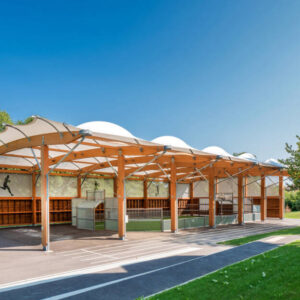
WHY DO WE TALK ABOUT PLAY ARCHITECTURE AT SMC2?

By combining our expertise in structural engineering with creativity, we are opening up a whole new dimension in the world of play by bringing together sport and play.
What is play architecture?
Play architecture is not just an area with play equipment (swings, slides, etc.): it is the art of designing a complete play space, conceived as a fully-fledged architectural structure.
Our definition
Play architecture is the art of designing play spaces and constructing recreational structures, whilst adhering to building standards as well as aesthetic, form and spatial layout concepts, and incorporating the social and environmental aspects linked to the structure’s function and its integration into its surroundings.
In practical terms, what does this mean?
Play architecture involves designing structured, aesthetically pleasing spaces that are integrated into their surroundings, whilst meeting technical construction requirements. It is about creating spaces that tell a story (clouds, huts, towers, pebbles…) and stimulate children’s imagination. Play architecture is designed to be usable all year round (protection from rain, sun, cold, etc.).
This approach links architecture, play, nature and social interaction, and goes far beyond basic recreational function.

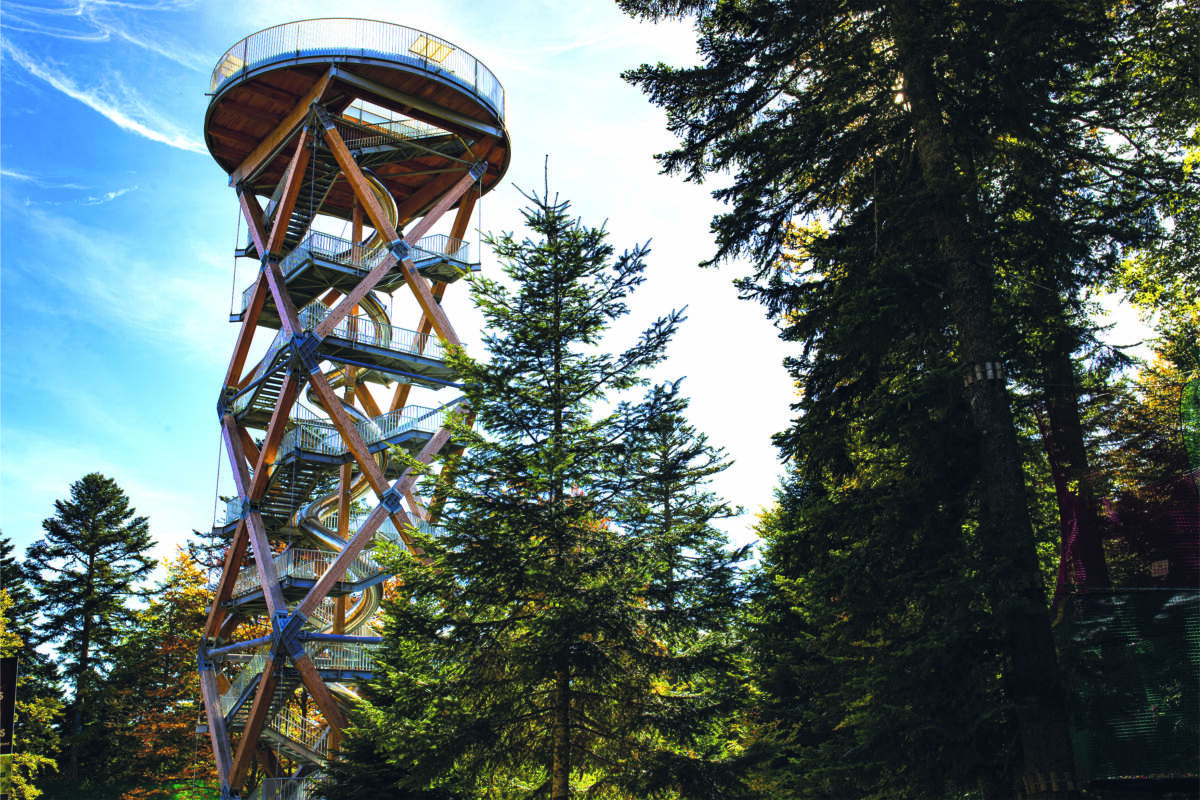

Why talk about ‘play architecture’ rather than a ‘playground’?
The term ‘play architecture’ is used primarily because these play spaces are given an architectural dimension. Rather than simply installing prefabricated play equipment, a complete structure is created, involving spatial and architectural planning (shapes, volumes, materials, etc.). The aim is to create genuine narrative pathways where children can explore, climb and use their imagination.
More than just a playground, play architecture offers the possibility of elevated play areas, allowing children of all ages to experience greater thrills whilst having fun, whilst minimising the impact on the ground. A major land-use advantage, which also reduces land sealing, in the interests of environmental conservation.
Finally, gone are the days of playgrounds with slides that get scorching hot in summer and damp swings in winter. Play architecture provides covered play areas, allowing for year-round use. It also protects children from the heat and sun during the summer months, safeguarding their health.
In conclusion, play architecture is not merely a place to play, but a living space designed to last, stimulate, bring people together and blend seamlessly into its surroundings.